
Melbourne’s Best
The best of Melbourne, from famous sights to hidden gems
Whether it’s your first visit or your fiftieth, these are the places we’d point you to first. Each list starts with the famous names and ends with a hidden gem or two that locals love.
For every place we’ve added how to get there, what it costs and a tip, plus links to check what’s on before you go.
01 · Melbourne’s Best
City Must-see sights
If it’s your first time in Melbourne, start here. These landmarks sit within an easy walk of each other in the city centre, and most of them are free.
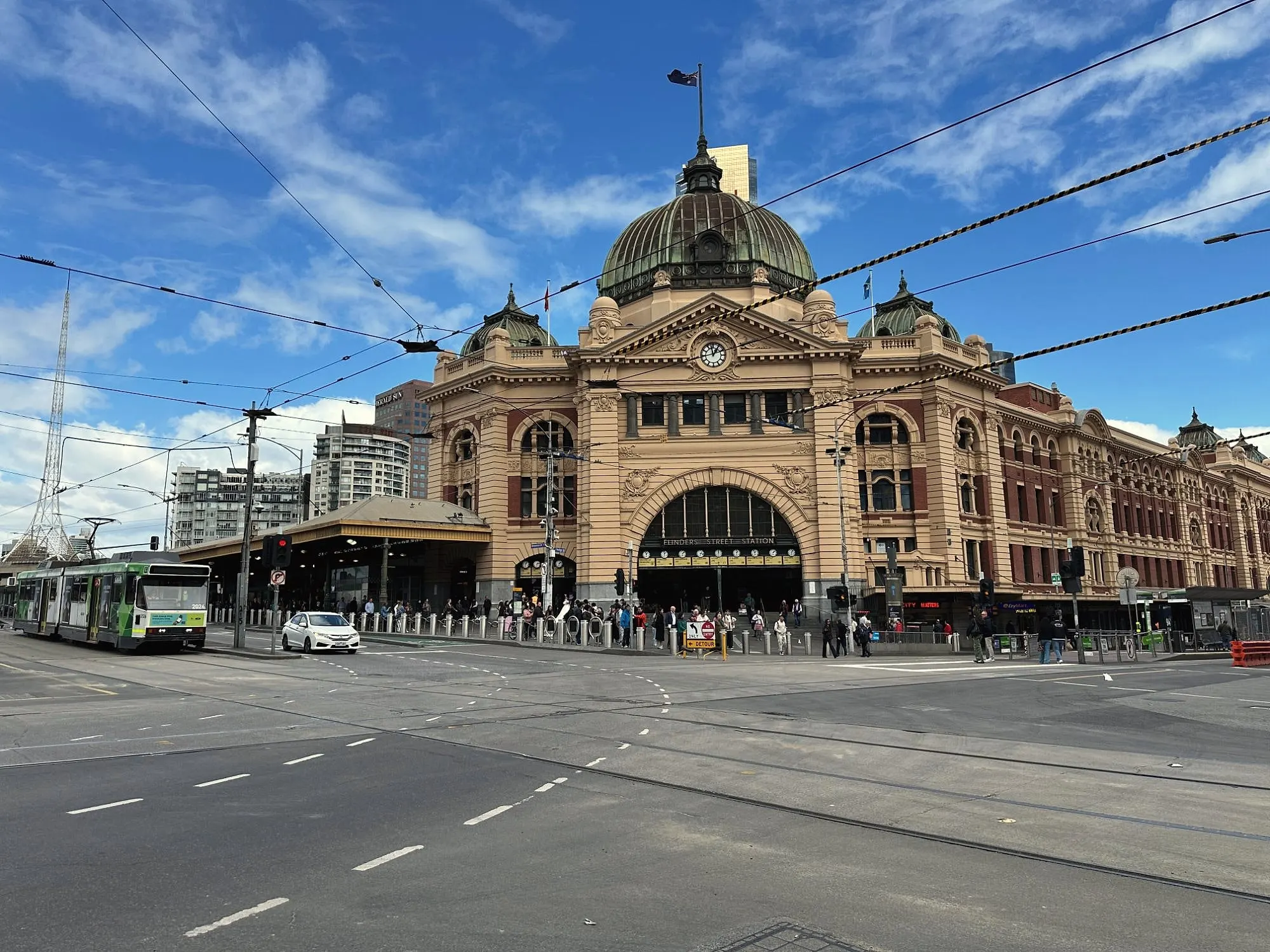
Flinders Street Station
Corner of Flinders and Swanston streets
Finished in 1910 and heritage-listed, the station’s dome and row of clocks are the city’s best-known meeting place. Melburnians have been saying “meet you under the clocks” for more than a century.
- Getting there:
- It’s the city’s main train station, inside the Free Tram Zone.
- Cost:
- Free to see.
- Tip:
- The building lights up at night. For the classic photo, stand on Princes Bridge at dusk.
Federation Square
Corner of Swanston and Flinders streets
The city’s meeting place and cultural hub, home to ACMI, The Ian Potter Centre: NGV Australia and the Koorie Heritage Trust, with free events through the year.
- Getting there:
- Directly opposite Flinders Street Station, inside the Free Tram Zone.
- Cost:
- Free; some exhibitions are ticketed.
- Tip:
- Check the Fed Square calendar before you go: something is often on in the main square.
State Library Victoria
Swanston Street, Melbourne city centre
Its La Trobe Reading Room, opened in 1913, is a six-storey octagonal room under a great dome, one of the most beautiful interiors in the city.
- Getting there:
- State Library station is right outside, inside the Free Tram Zone.
- Cost:
- Free.
- Tip:
- Open daily from 10am. Climb to the level 6 balcony for the view down into the dome.
Shrine of Remembrance
Kings Domain, St Kilda Road
Victoria’s main war memorial, set in parkland on St Kilda Road. Free guided tours run through the day, and the upper balcony looks straight back up St Kilda Road to the city.
- Getting there:
- Any southbound tram from Federation Square except route 1, to the Shrine of Remembrance stop, or Anzac station. About 1.3 km from Flinders Street Station.
- Cost:
- Free; donations welcome.
- Tip:
- Open daily 10am to 5pm. The balcony is reached by stairs only.
Old Treasury Building
Spring Street, at the top of Collins StreetHidden gem
A grand 1860s government building whose basement vaults once held gold from the goldfields. Today it’s a free museum of Melbourne’s history.
- Getting there:
- A short walk from Parliament station, inside the Free Tram Zone.
- Cost:
- Free.
- Tip:
- Closed on Saturdays, so plan a weekday or Sunday visit.
02 · Melbourne’s Best
Laneways and arcades
Melbourne’s laneways are where the city shows its personality: street art, tiny coffee bars and grand Victorian arcades, all hidden between the main streets. Wander slowly and look up.
Hosier Lane
Opposite Federation Square
The birthplace of Melbourne’s street art scene. Stencils, paste-ups and murals cover every surface and change constantly, so no two visits are the same.
- Getting there:
- A couple of minutes’ walk from Flinders Street Station, inside the Free Tram Zone.
- Cost:
- Free.
- Tip:
- Go early in the morning to take photos without the crowds, and look up for the large murals.
Degraves Street and Centre Place
Across from Flinders Street Station
Two narrow laneways lined with tiny espresso bars, outdoor tables and murals: the classic picture of Melbourne’s coffee culture.
- Getting there:
- Directly across Flinders Street from the station, inside the Free Tram Zone.
- Cost:
- Free to wander.
- Tip:
- At the end of Centre Place, climb the stairs into the Centreway Arcade. Mid-morning on a weekday shows the coffee ritual at its busiest.
The Block Arcade
Collins Street to Elizabeth Street
A heritage-listed arcade from the 1890s, modelled on Milan’s Galleria, with a glass canopy, mosaic floor and beautifully kept old shopfronts.
- Getting there:
- In the heart of the city, inside the Free Tram Zone.
- Cost:
- Free.
- Tip:
- Look down as well as up: the mosaic floor is the arcade’s showpiece.
Royal Arcade
Bourke Street Mall
Opened in 1870, it’s the oldest surviving arcade in Australia. Gaunt’s Clock is guarded by the giant figures Gog and Magog.
- Getting there:
- On Bourke Street Mall, inside the Free Tram Zone.
- Cost:
- Free.
- Tip:
- Arrive on the hour: Gog and Magog have struck the bells since 1892.
AC/DC Lane and Duckboard Place
Off Flinders Lane, east end of the city
Named after the band, AC/DC Lane is covered in rock-and-roll street art. Duckboard Place next door is full of big murals and gig posters.
- Getting there:
- A short walk along Flinders Lane from Flinders Street Station, inside the Free Tram Zone.
- Cost:
- Free.
- Tip:
- Walk the two lanes as one route. The art changes often, so expect something new.
Cathedral Arcade, Nicholas Building
Swanston Street and Flinders LaneHidden gem
Step inside the 1926 Nicholas Building to find a vaulted leadlight ceiling glowing above the arcade. The floors above are home to artists, designers and small studios.
- Getting there:
- One block from Flinders Street Station, inside the Free Tram Zone.
- Cost:
- Free.
- Tip:
- Easy to miss from the street: look for the arcade entrance on the corner of Flinders Lane.
Manchester Unity Building
Swanston and Collins streetsHidden gem
A 1932 Art Deco tower opposite the Town Hall, with carved marble in the ground-floor arcade. Its escalators were the first in Victoria, and one original still runs.
- Getting there:
- In the heart of the city, inside the Free Tram Zone.
- Cost:
- The arcade is free; guided building tours are ticketed.
- Tip:
- Tours sell out, so check the building’s website for new dates.
03 · Melbourne’s Best
Gardens and parks
Melbourne is called the garden city for good reason. Within a short walk of the centre you’ll find grand Victorian gardens, shady fern gullies and wide lawns made for a picnic.
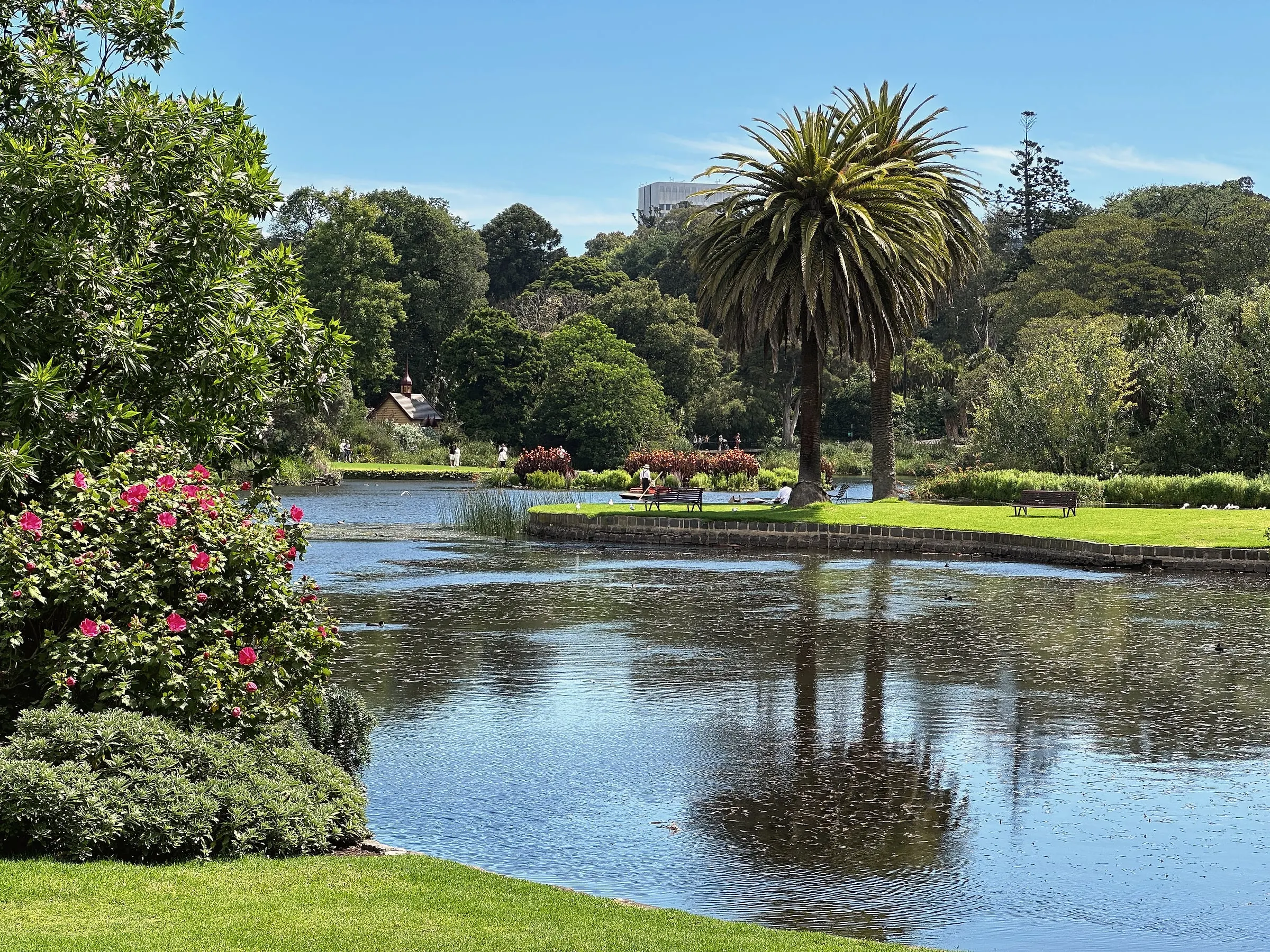
Royal Botanic Gardens Melbourne
South Yarra
38 hectares of gardens with more than 8,500 plant species, sweeping lawns and the Ornamental Lake, open every day of the year.
- Getting there:
- Trams 3, 5, 6, 16, 64, 67 and 72 to the Shrine of Remembrance stop, then a short walk to Observatory Gate. Anzac station is the nearest train.
- Cost:
- Free.
- Tip:
- Open from 7.30am. Closing time changes with the season: 7.30pm from October to March, 5.30pm the rest of the year.
Fitzroy Gardens
East Melbourne
A heritage garden from the 1840s with elm-lined paths, the Conservatory and its seasonal flower displays, and Cooks’ Cottage, brought from Yorkshire in 1934.
- Getting there:
- Trams 48 and 75 along Wellington Parade, or a walk from Parliament or Jolimont station.
- Cost:
- The gardens and Conservatory are free. Cooks’ Cottage is ticketed.
- Tip:
- The Conservatory changes its display five times a year, so there’s always something in flower.
Carlton Gardens and the Royal Exhibition Building
Carlton
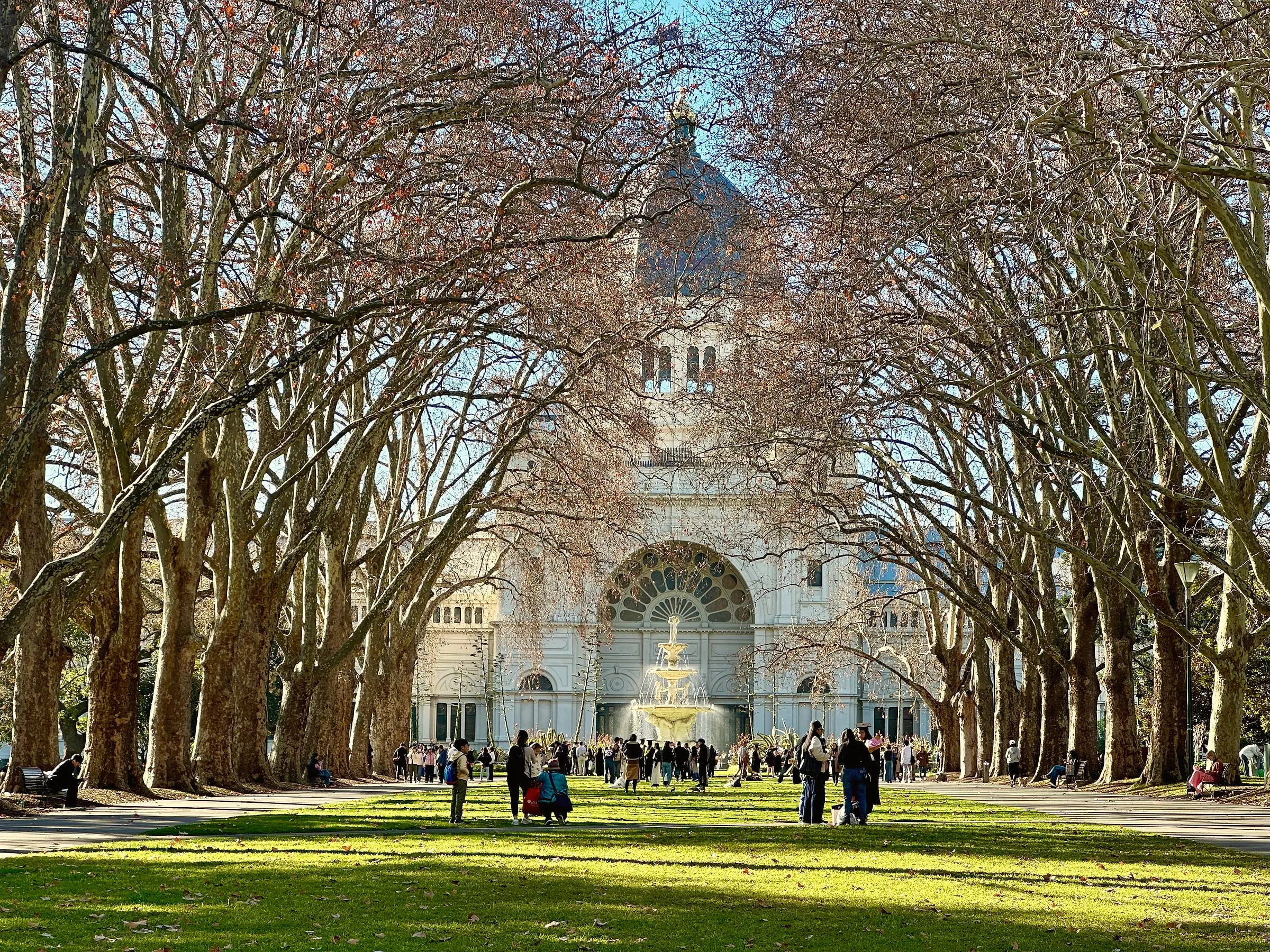
In 2004 the gardens and the 1880 Royal Exhibition Building became Australia’s first built place on the World Heritage List. Look for the grand Hochgurtel Fountain and the old Moreton Bay figs.
- Getting there:
- Trams 86 or 96 to Nicholson Street, or about a 10-minute walk from Parliament station.
- Cost:
- The gardens are free; building tours are ticketed.
- Tip:
- The Melbourne International Flower and Garden Show is held here each autumn.
Treasury Gardens
East Melbourne, off Spring Street
A heritage garden of elm avenues and Moreton Bay figs, with a small lake and the John F. Kennedy Memorial, right beside Fitzroy Gardens.
- Getting there:
- A short walk from Parliament station. The free City Circle tram runs along Spring Street.
- Cost:
- Free.
- Tip:
- Walk through to Fitzroy Gardens next door. At dusk, look for brushtail possums in the trees.
Fern Gully
Royal Botanic GardensHidden gem
A cool, shady gully where a boardwalk follows a stream beneath tree ferns and palms. It can be several degrees cooler than the city on a hot day.
- Getting there:
- Inside the Royal Botanic Gardens; use the Gardens’ interactive map.
- Cost:
- Free.
- Tip:
- Step off the boardwalk to find the Moss Garden and the Grotto.
The Fairies’ Tree
Fitzroy GardensHidden gem
In the 1930s, sculptor Ola Cohn carved fairies, gnomes and Australian animals into the trunk of an old red gum. Children love finding all the little figures.
- Getting there:
- Inside Fitzroy Gardens.
- Cost:
- Free.
- Tip:
- Ask at the Visitor Centre near Cooks’ Cottage for directions: it’s tucked away.
04 · Melbourne’s Best
Views and photo spots
As photographers, these are the places we keep coming back to. Go at sunrise or dusk, when the light is soft and the city starts to glow.
Melbourne Skydeck
Eureka Tower, Southbank
An observation deck on level 88, 285 metres above the city, with views across the bay to the ranges. The Edge, a glass cube that slides out from the building, is an extra thrill.
- Getting there:
- About five minutes’ walk from Flinders Street Station, or tram 58.
- Cost:
- Ticketed; cheaper when booked online. The Edge costs extra.
- Tip:
- Sunset is the busiest time, so book ahead.
Princes Bridge and the Southbank riverside
Between Flinders Street Station and Southbank
From the bridge, Flinders Street Station, the Arts Centre spire and the river fit into one frame, with the Southbank promenade stretching away beside the water.
- Getting there:
- Steps from Flinders Street Station and Federation Square.
- Cost:
- Free.
- Tip:
- Come at dusk, when the station lights up. It’s a busy footpath, so early morning is best for clear shots.
Shrine of Remembrance balcony
Kings Domain, St Kilda Road
The upper balcony gives a panorama over the gardens, with a protected view straight up St Kilda Road and Swanston Street to the city.
- Getting there:
- Southbound trams from Federation Square to the Shrine of Remembrance stop, or Anzac station.
- Cost:
- Free.
- Tip:
- Stairs only. The balcony can close for ceremonies, so check before you go.
Albert Park Lake
Albert Park
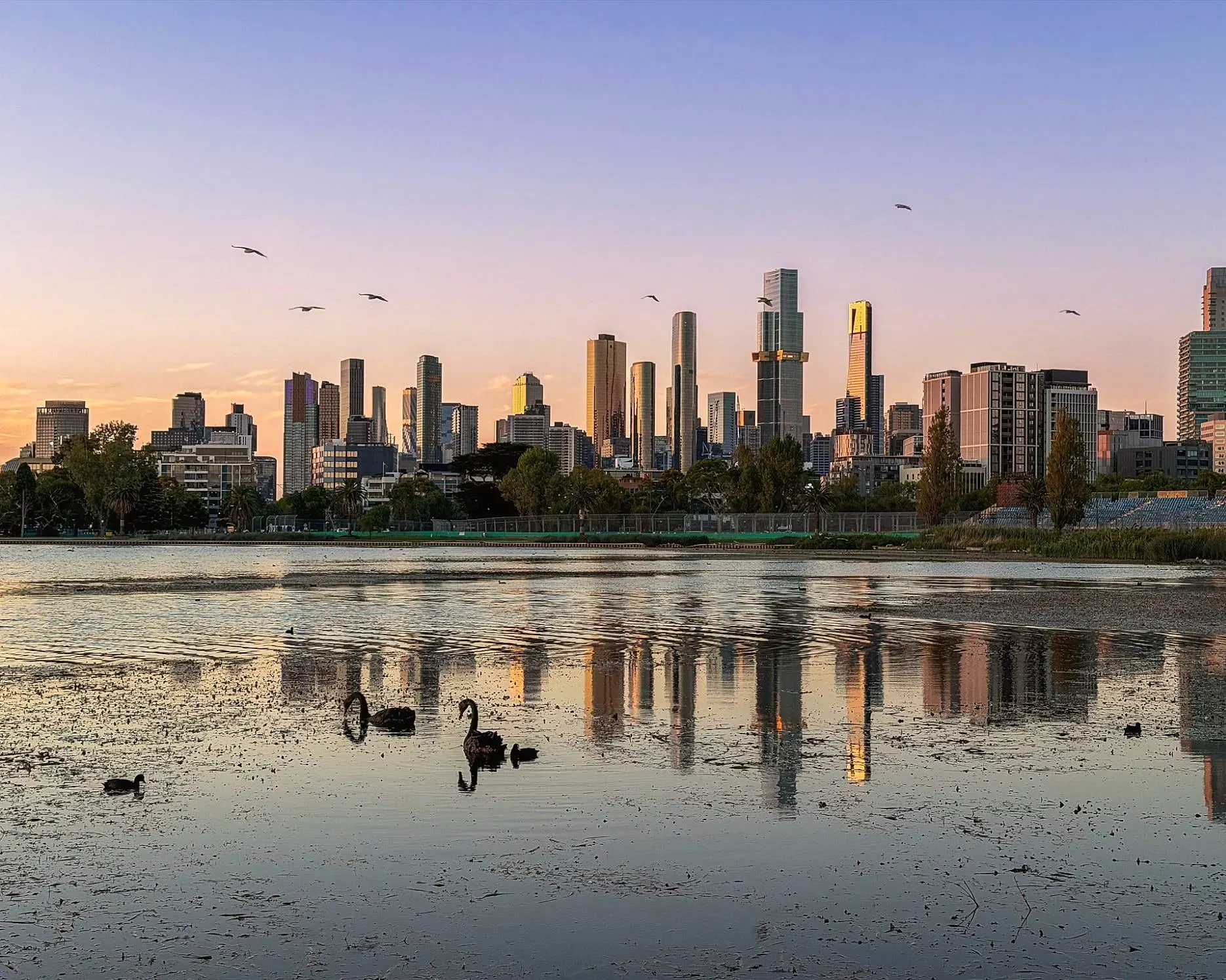
A lake about 3 km from the city, ringed by a 5 km walking path, with black swans and the skyline reflected in the water on a still day.
- Getting there:
- Check the journey planner; it’s a short tram ride south of the city.
- Cost:
- Free.
- Tip:
- The best skyline view is from the southern end of the lake, especially at sunrise.
Trig Point Lookout
Yarra Bend Park, KewHidden gem
A quiet grassy spot with a picnic bench and a clear view of the city skyline over the treetops, a short walk from Yarra Boulevard.
- Getting there:
- Best by car, with parking on Yarra Boulevard.
- Cost:
- Free.
- Tip:
- The ground is uneven, so wear good shoes. Drones need a permit.
Guilfoyle’s Volcano
Royal Botanic GardensHidden gem
An 1876 reservoir at the highest point of the Botanic Gardens, planted as a “volcano” of succulents and red rock, with city views beyond.
- Getting there:
- Inside the Royal Botanic Gardens; use the interactive map.
- Cost:
- Free.
- Tip:
- Combine it with Fern Gully and the Ornamental Lake for a photo walk.
05 · Melbourne’s Best
Food, coffee and markets
Melbourne is a city that loves to eat. Start with a market, follow the smell of coffee down a laneway, and leave room for dumplings. These places have been feeding Melburnians for generations.
Queen Victoria Market
Melbourne city centre
Trading since 1878 and on the National Heritage List, the market is packed with fresh produce, delis and specialty stalls under its old sheds.
- Getting there:
- Trams 19, 57, 58 or 59 along Elizabeth Street, inside the Free Tram Zone.
- Cost:
- Free entry.
- Tip:
- Closed Mondays and Wednesdays. Go early: traders start packing up an hour or more before closing.
Chinatown
Little Bourke Street, Melbourne city centre
Australia’s oldest Chinatown, dating from the 1850s gold rush. Come for dumplings, yum cha and the lanes and arcades that branch off the main strip.
- Getting there:
- Parliament station is at the Spring Street end, and Swanston Street trams cross it. Inside the Free Tram Zone.
- Cost:
- Free to wander.
- Tip:
- Lunar New Year (January or February) brings lion dances and celebrations to the street.
Lygon Street
Carlton
Melbourne’s Little Italy, built by post-war Italian migrants, where the city’s café culture began in the 1950s. Pasta, pizza and gelato line the street.
- Getting there:
- A short walk east from the Swanston Street trams, or trams 1 and 6.
- Cost:
- Free to wander.
- Tip:
- Carlton Gardens and Melbourne Museum are two blocks away, so it pairs well with a museum visit.
South Melbourne Market
South Melbourne
A friendly village market trading since 1867, best known for its dim sims, which have been sold here since 1949.
- Getting there:
- Tram 96 from Bourke Street or tram 12, to the South Melbourne Market stop.
- Cost:
- Free entry.
- Tip:
- Open Wednesday, Friday, Saturday and Sunday. Try a dim sim while you shop.
Footscray Market and Hopkins Street
FootscrayHidden gem
More than 75 stalls of fresh and Asian produce at the heart of one of Melbourne’s most multicultural suburbs, surrounded by Vietnamese and Ethiopian eateries.
- Getting there:
- Across the road from Footscray station.
- Cost:
- Free entry.
- Tip:
- Closed Sundays and Mondays. Look for banh mi bakeries and injera nearby.
06 · Melbourne’s Best
Art, museums and culture
Many of Melbourne’s best galleries are free, and most sit within a short walk of Flinders Street Station. Leave time for First Nations art and culture too: it’s some of the most rewarding you’ll find in the city.
NGV International
St Kilda Road, Southbank
The National Gallery of Victoria, founded in 1861, is Australia’s oldest public art gallery. Look up in the Great Hall at Leonard French’s vast stained-glass ceiling.
- Getting there:
- A 5 to 10 minute walk from Flinders Street Station over Princes Bridge, or a St Kilda Road tram to the Arts Precinct.
- Cost:
- Free general entry; some exhibitions are ticketed.
- Tip:
- Open daily from 10am. Kids love running their hands over the water wall at the entrance.
Melbourne Museum and Bunjilaka
Carlton
Victoria’s natural and social history museum, home to Phar Lap, dinosaurs and a living Forest Gallery. Bunjilaka Aboriginal Cultural Centre is included in entry.
- Getting there:
- Trams 86 or 96 to Nicholson Street, or the free City Circle tram. It’s beside the Royal Exhibition Building.
- Cost:
- Adults pay for entry; children and concession holders are free. Touring exhibitions cost extra.
- Tip:
- Pair it with a walk through Carlton Gardens and a coffee on Lygon Street.
ACMI
Federation Square
Australia’s museum of screen culture: film, television, videogames and art. The permanent exhibition, The Story of the Moving Image, is free and great for all ages.
- Getting there:
- Opposite Flinders Street Station, inside the Free Tram Zone.
- Cost:
- Free entry; some exhibitions and screenings are ticketed.
- Tip:
- Open daily from 10am. Check the cinema programme for screenings while you’re there.
The Ian Potter Centre: NGV Australia
Federation Square
The NGV’s collection of Australian art, from colonial painting to contemporary work, including a free First Nations exhibition.
- Getting there:
- Opposite Flinders Street Station, inside the Free Tram Zone.
- Cost:
- Free general entry; some exhibitions are ticketed.
- Tip:
- The Koorie Heritage Trust (below) is in the same square.
Old Melbourne Gaol
Russell Street, Melbourne city centre
A 19th-century gaol run by the National Trust, with a self-guided visit and the City Watch House experience.
- Getting there:
- About five minutes’ walk from Melbourne Central station, inside the Free Tram Zone.
- Cost:
- Ticketed.
- Tip:
- Arrive well before mid-afternoon: last entry is around 3pm. Night tours are booked ahead.
Koorie Heritage Trust
Federation SquareHidden gem
A First Peoples arts and cultural centre with collections and changing exhibitions, right beside Flinders Street Station.
- Getting there:
- Inside the Free Tram Zone, next to Flinders Street Station.
- Cost:
- Free.
- Tip:
- It also runs guided Aboriginal cultural walking tours of the city.
Heide Museum of Modern Art
BulleenHidden gem
Modern art in a beautiful setting beside the Yarra River, with gardens and a sculpture park you can wander for free.
- Getting there:
- About 9 km from the city. Hurstbridge line train to Heidelberg, then a bus; check the journey planner.
- Cost:
- Gallery entry is ticketed; the gardens and sculpture park are free.
- Tip:
- Closed Mondays. Bring a picnic for the sculpture park.
07 · Melbourne’s Best
Theatre and live music
From big musicals in grand old theatres to a band in a Fitzroy pub, there’s a show somewhere in Melbourne every night of the week.
Arts Centre Melbourne
St Kilda Road, Southbank
Melbourne’s home of opera, ballet, theatre and concerts, under the landmark Spire. The newly refurbished Ian Potter State Theatre reopened in October 2026, and Hamer Hall sits beside the river.
- Getting there:
- About five minutes’ walk from Flinders Street Station over Princes Bridge.
- Cost:
- Ticketed; some events are free.
- Tip:
- Look out for free events in the foyers and on the forecourt.
East End Theatre District
Melbourne city centre
Melbourne’s home of musicals: the Princess Theatre, Her Majesty’s, the Regent, the Comedy Theatre and the Athenaeum, several dating from the 1800s.
- Getting there:
- Parliament station is closest, inside the Free Tram Zone.
- Cost:
- Ticketed.
- Tip:
- Book a pre-theatre dinner nearby; the surrounding streets are full of restaurants.
Forum Melbourne
Flinders Street, Melbourne city centre
A 1929 picture palace turned gig venue, with Moorish towers outside and a ceiling painted like an evening sky inside.
- Getting there:
- A short walk from Flinders Street Station, inside the Free Tram Zone.
- Cost:
- Ticketed.
- Tip:
- Popular shows sell out, so book early.
Sidney Myer Music Bowl
Kings Domain
An outdoor stage in the parkland since 1959, with seats and a big lawn. It’s the home of Carols by Candlelight on Christmas Eve.
- Getting there:
- A 10 to 15 minute walk from Flinders Street Station, or a St Kilda Road tram.
- Cost:
- Mostly ticketed; free summer concerts are held some years.
- Tip:
- Bring a picnic rug for the lawn.
Palais Theatre
St Kilda
A heritage-listed 1920s picture palace by the beach, now one of Melbourne’s favourite venues for big-name concerts and comedy.
- Getting there:
- Trams 16 or 96 to Luna Park, about a minute’s walk.
- Cost:
- Ticketed.
- Tip:
- Arrive early for a sunset walk on the St Kilda foreshore before the show.
Fitzroy and Collingwood band rooms
Brunswick, Smith and Johnston streetsHidden gem
The heart of Melbourne’s pub-gig scene, with venues like The Tote, The Old Bar, The Workers Club and The Night Cat putting on local bands most nights.
- Getting there:
- Tram 11 along Brunswick Street or tram 86 along Smith Street.
- Cost:
- Mostly ticketed; some nights are free.
- Tip:
- Check each venue’s own gig guide, then make a night of it on foot between them.
08 · Melbourne’s Best
Sport
Melbourne takes its sport seriously, and big events fill the calendar all year. Even if you’re not a fan, a game at the MCG or a day at the tennis shows you the city at its most lively.
Melbourne Cricket Ground (MCG)
Yarra Park, East Melbourne
Australia’s best-known stadium and the home of AFL football and Test cricket. On non-event days, the guided MCG Tour goes behind the scenes, and the Australian Sports Museum is inside Gate 3.
- Getting there:
- Train to Jolimont station, then a five-minute walk through Yarra Park. Trams 48 and 75 stop on Wellington Parade.
- Cost:
- Tours and the museum are ticketed; booking is essential for tours.
- Tip:
- Tours don’t run on some match days, so check the MCG events calendar before you book. The Boxing Day Test starts on 26 December each year.
Australian Open
Melbourne Park
The first Grand Slam tennis tournament of the year, played every January across Rod Laver, Margaret Court and John Cain arenas, a short walk from the city.
- Getting there:
- Tram 70 from Flinders Street, or walk about ten minutes from the city through Birrarung Marr.
- Cost:
- Ticketed.
- Tip:
- Opening Week, before the main draw begins, is a quieter and more affordable way to enjoy the atmosphere.
AFL football
MCG and Marvel Stadium, Docklands
Australian rules football is Melbourne’s winter obsession, with games most weekends from March to September. The Grand Final is played at the MCG.
- Getting there:
- For the MCG, see above. For Marvel Stadium, train to Southern Cross and cross the footbridge.
- Cost:
- Ticketed.
- Tip:
- Pick a team for the day and join in. The new season’s fixture is usually released late in the year.
Melbourne Cup Carnival
Flemington Racecourse
Four days of racing in late October and early November, built around the Melbourne Cup on the first Tuesday of November. Cup Day is a public holiday in Melbourne.
- Getting there:
- Extra trains run to Flemington Racecourse station on race days. Tram 57 runs from Elizabeth Street.
- Cost:
- Ticketed.
- Tip:
- Book early, and check the Transport Victoria journey planner for race-day trains.
Formula 1 Australian Grand Prix
Albert Park
A street circuit around Albert Park Lake, just south of the city, hosts a round of the Formula 1 World Championship. It’s usually in March; in 2027 it moves to early April.
- Getting there:
- Train to Anzac station and walk to the gates, or take a St Kilda Road tram. There is no public parking.
- Cost:
- Ticketed.
- Tip:
- Session times are released closer to the race, so check the official schedule.
The Tan
Kings Domain, South YarraHidden gem
Melbourne’s favourite running and walking track, a 3.8-kilometre gravel loop around the Royal Botanic Gardens. You’ll share it with locals at every pace.
- Getting there:
- A short walk from Flinders Street Station or Federation Square, or any St Kilda Road tram.
- Cost:
- Free.
- Tip:
- Go early in the morning. The one real climb is the Anderson Street hill.
09 · Melbourne’s Best
Beaches and the bay
Port Phillip Bay is never far away. Most of these beaches are a tram or train ride from the city, and each has its own character, from busy St Kilda to quiet rock pools further south.
St Kilda beach and pier
St Kilda
Melbourne’s best-known beach suburb, with the foreshore, the Esplanade and Acland Street. A colony of little penguins lives in the breakwater at the end of the pier.
- Getting there:
- Tram 96 from the city to the Esplanade, or trams 12 and 16 to St Kilda.
- Cost:
- The beach is free. Penguin viewing is free but must be booked online.
- Tip:
- Penguin tickets are released each Tuesday for the following week and go quickly. No flash or torches on the viewing platform.
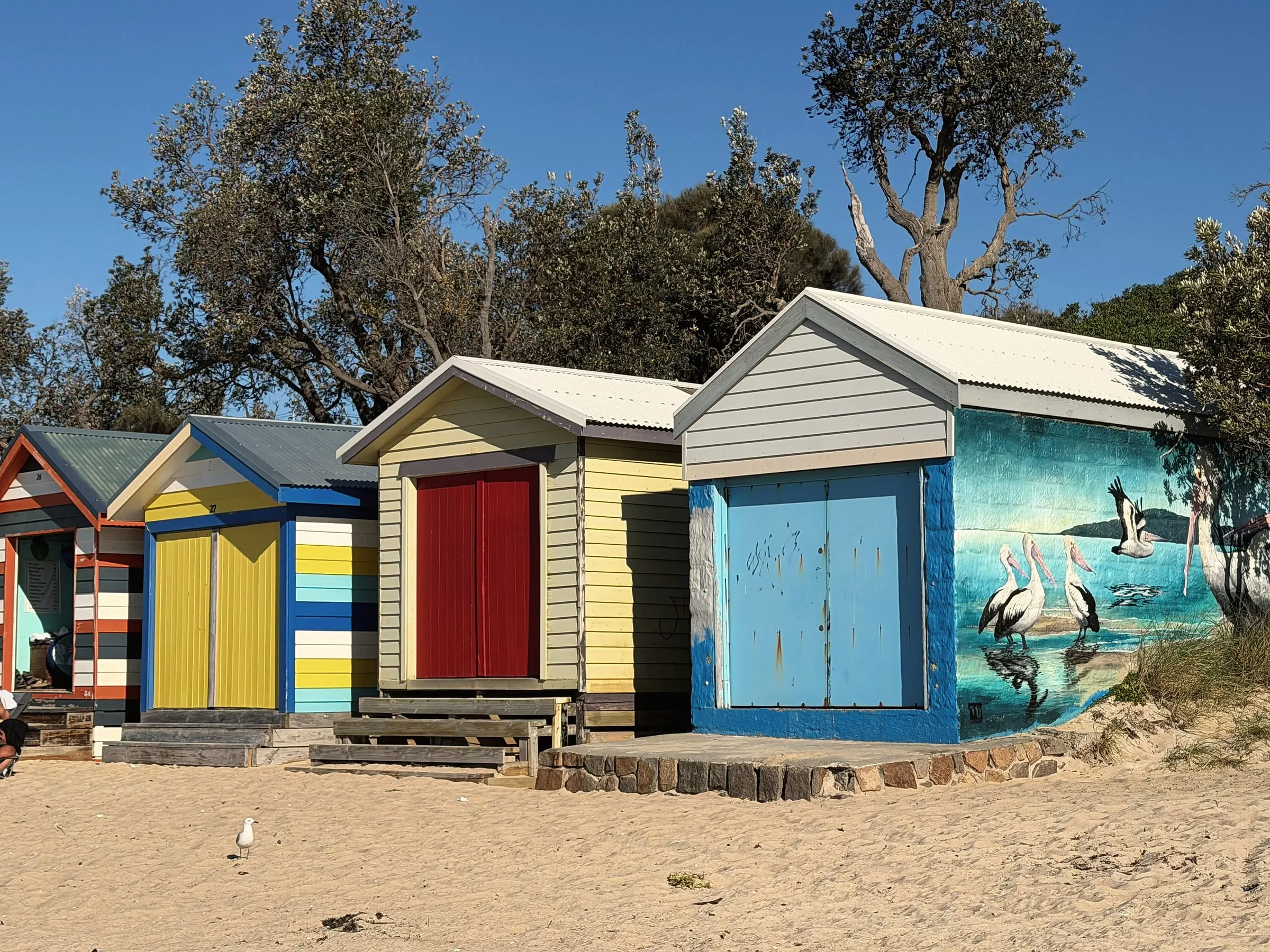
Brighton bathing boxes
Dendy Street Beach, Brighton
A row of brightly painted bathing boxes along the sand, one of Melbourne’s most photographed sights.
- Getting there:
- Sandringham line train to Middle Brighton or Brighton Beach station, then a 10 to 20 minute walk.
- Cost:
- Free.
- Tip:
- The boxes are privately owned, so take photos but don’t climb on them. Early morning and late afternoon have the softest light and fewer people.
Williamstown
Williamstown
A historic port town across the bay, with cafés and pubs along Nelson Place, the museum ship HMAS Castlemaine at Gem Pier, and a patrolled beach in summer.
- Getting there:
- Williamstown line train, or a ferry from Southbank to Gem Pier.
- Cost:
- Free to visit. The ferry is ticketed.
- Tip:
- Take the ferry one way for the skyline views and the train back. Ferry days change with the season, so check the timetable.
Port Melbourne and Station Pier
Port Melbourne
A long sandy bay beach beside Melbourne’s cruise-ship pier, with a flat foreshore path that runs all the way to St Kilda.
- Getting there:
- Tram 109 to the end of the line at Station Pier.
- Cost:
- Free.
- Tip:
- Walk or ride the foreshore path south to St Kilda for lunch.
Mornington Peninsula beaches
Mornington to Portsea
Calm bay beaches lined with bathing boxes at Mornington, Mount Martha and Portsea, and wilder ocean beaches with rock pools on the other side of the peninsula.
- Getting there:
- Best by car: about an hour to Mornington. By public transport, Frankston line train then bus 788.
- Cost:
- Free.
- Tip:
- Swim on the bay side. Ocean beaches like Sorrento back beach have strong rips, so swim between the flags.
Ricketts Point Marine Sanctuary
BeaumarisHidden gem
A protected stretch of shallow, clear water with sandstone reefs and rock pools. It’s one of the best places to snorkel close to Melbourne.
- Getting there:
- About 20 minutes by car. By public transport, Sandringham line train then a bus; check the journey planner.
- Cost:
- Free.
- Tip:
- Snorkel at low tide on a calm day. It’s a sanctuary, so look but don’t take anything.
10 · Melbourne’s Best
Day trips and adventures
Some of Victoria’s best sights are an easy drive from the city. Most are best by car or on a tour, and a couple are worth an overnight stay if you have the time.
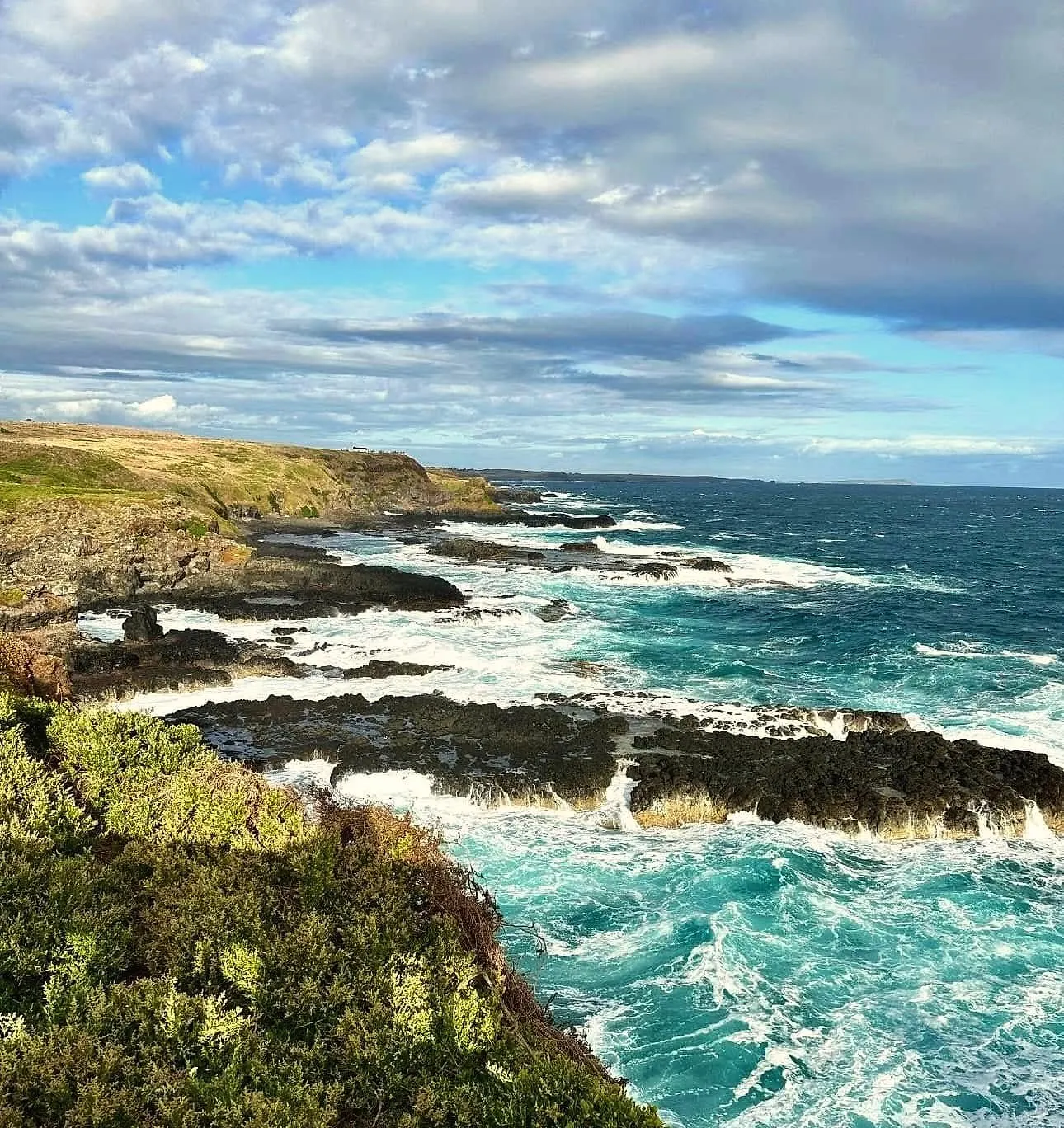
Great Ocean Road and the Twelve Apostles
South-west Victoria
One of the world’s great coastal drives, past surf beaches and the Otways rainforest to the limestone stacks of the Twelve Apostles, Loch Ard Gorge and Gibson Steps.
- Getting there:
- Best by car or on a tour. The Twelve Apostles are about 4 hours each way along the coast road.
- Cost:
- The coast is free. A new visitor centre at the Twelve Apostles opens in late 2026 with a booking system; check before you go.
- Tip:
- As a day trip it’s a long drive, so consider a tour or an overnight stay. Sunset at the Apostles is worth waiting for.
Phillip Island Penguin Parade
Phillip Island
Every evening at sunset, little penguins come ashore and waddle up the beach to their burrows while you watch from viewing stands.
- Getting there:
- Best by car or on a tour, about two hours from the city. The coach to Cowes doesn’t return after the parade.
- Cost:
- Ticketed; booking is essential.
- Tip:
- Bring warm layers in any season. Photos aren’t allowed once the penguins arrive, so leave the camera in your bag and enjoy it.
Yarra Valley and Healesville Sanctuary
Yarra Valley
Melbourne’s nearest wine region, about an hour away, with cellar doors between Coldstream and Healesville. Healesville Sanctuary shows native wildlife in a bushland setting.
- Getting there:
- Best by car or on a winery tour. For the Sanctuary, Lilydale line train then bus 685.
- Cost:
- The Sanctuary is ticketed. Wineries vary.
- Tip:
- Drive home through the Black Spur, a road lined with tall mountain ash and tree ferns.
Puffing Billy and the 1000 Steps
Dandenong Ranges
Puffing Billy is a historic steam train running through the forest from Belgrave. Nearby, the 1000 Steps is a steep rainforest climb lined with Kokoda Track memorial plaques.
- Getting there:
- Belgrave line train. Puffing Billy is a two-minute walk from Belgrave station; the 1000 Steps is about 1.2 km from Upper Ferntree Gully station.
- Cost:
- Puffing Billy is ticketed and must be booked. The 1000 Steps is free.
- Tip:
- Take the train on weekends: the 1000 Steps car park is usually full by mid-morning.
Peninsula Hot Springs
Fingal, Mornington Peninsula
Natural geothermal mineral springs with dozens of outdoor pools set into the hillside, plus a quieter adults-only area.
- Getting there:
- Best by car or with a shuttle tour from the city, about 90 minutes.
- Cost:
- Ticketed; book online.
- Tip:
- Pair it with a walk on the peninsula’s beaches.
Point Nepean National Park
PortseaHidden gem
At the very tip of the Mornington Peninsula: a historic Quarantine Station, Fort Nepean’s tunnels and gun emplacements, and coastal walks above the narrow entrance to the bay.
- Getting there:
- About 90 minutes by car. By public transport, Frankston line train then bus 788 to the park entrance.
- Cost:
- Entry to the park is free; a paid shuttle runs to Fort Nepean.
- Tip:
- Carry water: there is none beyond the Quarantine Station.
Hanging Rock
Near Woodend, Macedon RangesHidden gem
An ancient volcanic formation with a summit walk between giant boulders, made famous by Picnic at Hanging Rock. See our Mount Macedon story for a day that takes in both.
- Getting there:
- About an hour by car via the Calder Freeway. There is no bus from Woodend station.
- Cost:
- Paid entry, by card.
- Tip:
- The summit walk closes on very windy days, and the reserve closes on high fire-danger days.
A note: Details were checked in October 2026. Opening hours, prices and transport change, so check the official website or theTransport Victoriajourney planner before you go.